
Reusable Cotton Tea Bags UK: What to Know Before You Buy
Feb
TLDR
A reusable cotton tea bag is a small fabric pouch, usually made from unbleached organic cotton or muslin, designed to hold loose-leaf tea for brewing. You fill it, steep it, empty it, rinse it, and use it again. One reusable cotton tea bag replaces hundreds of disposable tea bags per year. They produce no plastic waste, cost less over time, and work with any type of loose-leaf tea, including black tea, green tea, and herbal tea. In the UK, where households consume over 36 billion cups of tea annually, switching to reusable tea bags is one of the simplest zero-waste kitchen swaps available.
What Are Reusable Cotton Tea Bags?
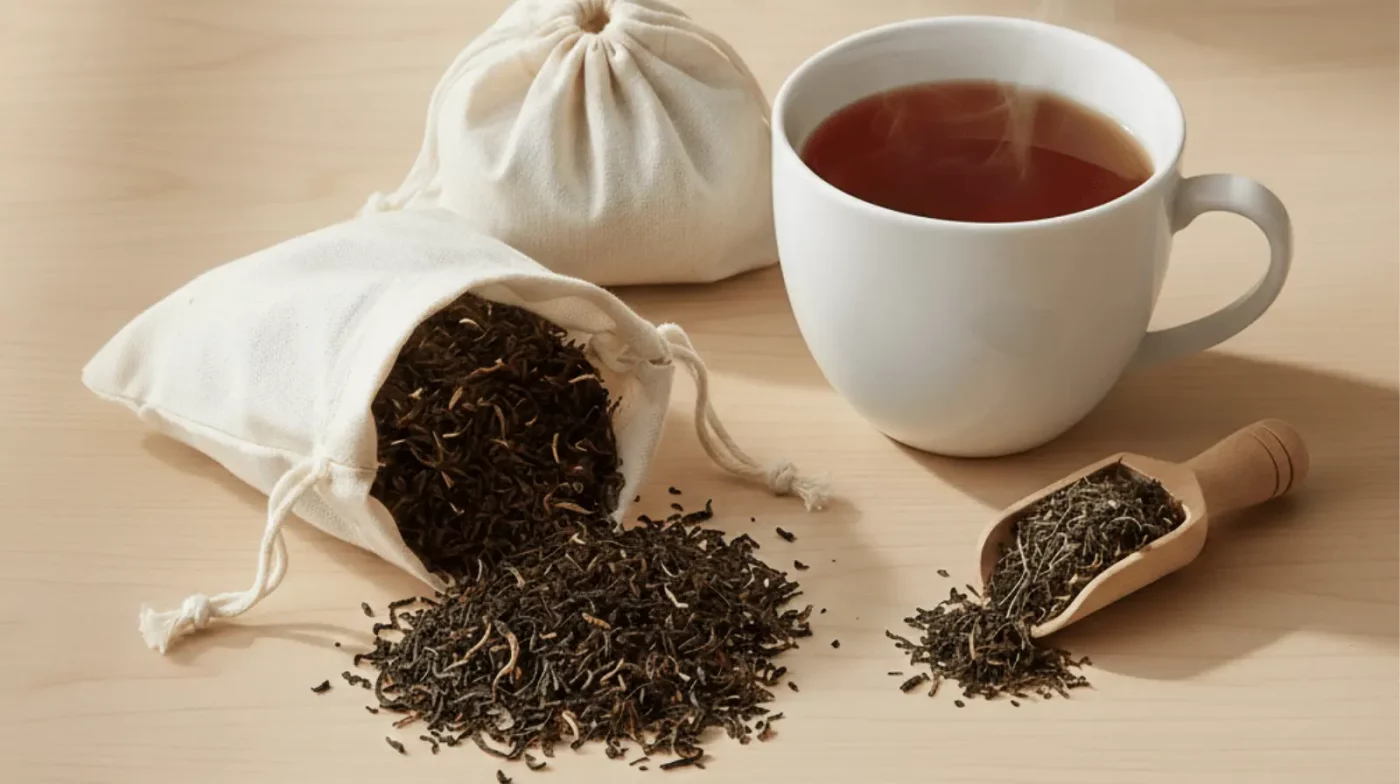
A reusable cotton tea bag is a washable fabric pouch used to brew loose-leaf tea. It works the same way as a disposable tea bag but is designed to last for months or years.
Most are made from organic cotton, unbleached muslin, or hemp. They typically feature a drawstring closure to keep tea leaves contained during steeping. Some are flat pouches. Others are shaped like small sacks.
They are a tea strainer alternative. Unlike metal infusers or teapot baskets, cotton tea bags are lightweight, portable, and easy to store. They suit mugs, cups, and teapots equally well.
Boring Basics stocks a range of reusable cotton tea bags made from certified organic cotton. Every bag is plastic-free, compostable at the end of life, and designed for daily use in a UK kitchen.
Why Do Reusable Tea Bags Matter?
Three reasons: environment, health, and cost.
Environmental impact
The UK drinks approximately 100 million cups of tea every day, according to the UK Tea & Infusions Association. That is roughly 36 billion cups per year. Around 96% of tea consumed in the UK is made using tea bags, according to research cited in the Journal of Food Science and Technology (Jha et al., 2020).
Many conventional tea bags contain polypropylene, a plastic used to heat-seal the paper. This means billions of tea bags each year are not fully biodegradable. Even brands switching to PLA (polylactic acid), a plant-based plastic, still require industrial composting facilities to break down properly. WRAP, the UK waste advisory body, advises against calling PLA tea bags “biodegradable” because the term may mislead consumers about how quickly they decompose.
A reusable cotton tea bag sidesteps this entirely. It contains no plastic. At the end of life, an organic cotton bag can go in a home compost bin.
Health considerations
A 2019 study published in Environmental Science & Technology found that a single plastic tea bag steeped at brewing temperature released approximately 11.6 billion microplastic particles and 3.1 billion nanoplastics into the cup. Reusable cotton tea bags release none. Food-grade organic cotton is inert in hot water and does not shed synthetic particles.
Any reusable tea bag sold for food use in the UK should comply with the Materials and Articles in Contact with Food (England) Regulations 2012, which enforce assimilated EU Regulation (EC) No 1935/2004. This means the fabric must not transfer harmful substances into food. Look for products that state compliance with food contact material safety standards.
Cost savings
A box of 240 standard tea bags costs roughly £3 to £5. An average UK tea drinker uses around 4 bags per day, or about 1,460 per year. That adds up to roughly £18 to £30 annually on disposable bags alone, plus the cost of the tea itself.
A single reusable cotton tea bag costs between £1 and £3 and typically lasts 6 to 12 months with daily use. A pack of 5 costs around £5 to £8 from UK retailers like Boring Basics eco-friendly tea accessories. Loose-leaf tea is often cheaper per gram than pre-bagged tea and allows you to control strength and portion size.
Over 12 months, the maths favours reusable bags. See the cost comparison below.
How Do You Use a Reusable Cotton Tea Bag?
Using a reusable tea bag is straightforward. Follow these steps:
- Open the bag. Loosen the drawstring or unfold the opening.
- Add loose-leaf tea. Use 1 to 2 teaspoons per cup, depending on the blend. Works with black tea, green tea, herbal tea, rooibos, or any loose-leaf variety.
- Close the bag. Pull the drawstring tight or fold the top over to prevent leaves from escaping.
- Place in your cup or teapot. Pour freshly boiled water over the bag.
- Steep. Allow 2 to 5 minutes, depending on the type of tea. Black tea typically needs 3 to 5 minutes. Green tea needs 2 to 3 minutes. Herbal tea may need 5 minutes or more.
- Remove the bag. Lift it out by the drawstring or tag.
- Empty the leaves. Tip used tea leaves into a compost bin or food waste caddy. Spent tea leaves are nitrogen-rich and benefit garden compost.
- Rinse immediately. Run the bag under warm water to remove residual tannins and prevent staining.
That is it. No special equipment needed.
How Do You Clean Reusable Tea Bags?
Regular cleaning extends the life of your reusable tea bags and prevents odour or mould buildup.
After every use
- Empty the tea leaves.
- Rinse the bag thoroughly under warm running water.
- Squeeze out excess water gently. Do not wring aggressively, as this can weaken the fabric over time.
- Hang or lay flat to air dry completely before storing.
Deep clean (weekly or fortnightly)
- Soak the bags in a bowl of hot water with 1 tablespoon of bicarbonate of soda for 30 minutes. This removes tannin stains and neutralises odours.
- Rinse well under clean water.
- Air dry fully.
Machine washing
Most organic cotton and muslin tea bags can go in the washing machine on a gentle cycle at 30 to 40 degrees Celsius. Use no fabric softener. Fabric softener coats the fibres and can affect the taste of your tea.
Do not tumble dry. Heat shrinkage can reduce the bag’s capacity and distort the drawstring.
What Materials Should You Look For?
Not all reusable tea bags are equal. The material matters for safety, taste, and durability.
Good materials
- Organic cotton. Grown without synthetic pesticides or fertilisers. Soft, durable, and food safe. This is the most common material for reusable tea bags in the UK.
- Unbleached muslin. A loosely woven cotton fabric. Lets water flow freely for good extraction. Avoid bleached versions, which may contain chlorine residues.
- Hemp. Naturally antimicrobial. More durable than cotton. Less common but increasingly available.
- Organic linen. Strong and long-lasting. Slightly coarser weave than cotton.
Materials to avoid
- Nylon mesh. Synthetic. May release microplastics at high temperatures.
- Polyester. Another synthetic. Same microplastic concern.
- Bleached fabrics. Chlorine-bleached cotton may leach chemicals into hot water.
- Bags with no food safety compliance. If a product does not confirm it is food-grade or compliant with UK food contact material regulations, do not use it for brewing.
Always check that the product is described as food-grade. Ideally, it should hold GOTS (Global Organic Textile Standard) or Oeko-Tex Standard 100 certification.
Reusable vs Disposable Tea Bags: How Do They Compare?
This comparison covers the key differences between reusable cotton tea bags and standard disposable tea bags sold in UK supermarkets.
| Feature | Reusable Cotton Tea Bag | Disposable Tea Bag |
|---|---|---|
| Material | Organic cotton, muslin, or hemp | Paper with polypropylene or PLA sealant |
| Plastic content | None | Up to 25% in some conventional bags |
| Microplastic release | None | Up to 11.6 billion particles per bag (plastic types) |
| Lifespan | 6 to 12 months (daily use) | Single use |
| Cost per year (4 cups/day) | £5 to £15 (bags + loose leaf tea) | £18 to £50 (pre-bagged tea) |
| Compostable | Yes, home compostable at end of life | Varies. PLA requires industrial composting. Polypropylene is not compostable. |
| Tea quality | Full control over leaf grade and quantity | Pre-portioned, often lower-grade fannings or dust |
| Waste generated | Near zero | Approximately 1,460 bags per person per year |
| UK food safety | Must comply with Food Contact Materials Regulations 2012 | Regulated under same framework |
| Flavour | Clean, no plastic taint | Regulated under the same framework |
What Does It Cost Over 12 Months?
Here is a realistic cost breakdown for a single person drinking 4 cups of tea per day in the UK.
Disposable tea bags (standard supermarket brand):
- 1,460 bags per year
- Approximately 6 boxes of 240 bags at £4 each = £24 per year
- Tea quality: standard blend, pre-portioned
Reusable cotton tea bags with loose leaf tea:
- 5 reusable bags (rotating use) at £6 for a pack = £6
- Loose leaf tea: approximately 2g per cup x 1,460 cups = 2.92kg per year
- Good quality loose-leaf black tea costs roughly £5 to £8 per 100g in the UK
- Annual tea cost: approximately £15 to £23
- Total: £21 to £29 per year
The annual cost is comparable. But with reusable bags, you get better tea, zero waste, and no microplastics. Over 5 years, the difference in waste alone is significant: zero bags in landfill versus over 7,000 disposable bags.
What Is the Environmental Impact in the UK?
The numbers tell a clear story.
The UK consumes approximately 36 billion cups of tea per year (UK Tea & Infusions Association, citing International Tea Committee data). With 96% of that made from tea bags, that is roughly 34.5 billion disposable tea bags used each year across UK households.
Even after recent industry shifts toward PLA-based bags, disposal remains a challenge. WRAP notes that PLA bags require industrial composting and should not be labelled as biodegradable. Councils vary in whether they accept PLA in food waste collections. Many UK households still lack kerbside food waste services, though the Environment Act 2021 mandates that all English local authorities must provide separate food waste collection.
Each reusable cotton tea bag replaces roughly 300 to 500 disposable bags per year, depending on use. If just 1% of UK tea drinkers switched to reusable bags, that would remove approximately 345 million disposable bags from the waste stream annually.
Organic cotton does have a production footprint. But a single tea bag uses a fraction of the cotton in a garment. At the end of life, it composts at home within weeks. No microplastics. No landfill.
Shop Reusable Cotton Tea Bags at Boring Basics
Boring Basics is a UK-based shop focused on practical, zero-waste alternatives for everyday life. Our reusable cotton tea bags are made from certified organic cotton, feature a drawstring closure, and are designed to work with any loose-leaf tea.
They are plastic-free, biodegradable, compostable, and built to last. Whether you drink black tea, green tea, or herbal blends, they handle it all.
Browse our full range of eco-friendly tea accessories for tea infusers, teapots, and compost-friendly kitchen products.
Small swaps matter. This is one of them.
Yes. Reusable cotton tea bags made from food-grade organic cotton are safe for brewing tea. In the UK, any material intended for food contact must comply with the Materials and Articles in Contact with Food (England) Regulations 2012, based on assimilated EU Regulation (EC) No 1935/2004. This means the fabric must not transfer harmful substances to food. Look for bags certified to GOTS or Oeko-Tex Standard 100 for additional assurance.
A well-made organic cotton tea bag lasts 6 to 12 months with daily use. Some users report longer lifespans with careful washing and drying. Replace the bag when the fabric thins noticeably, the drawstring frays, or stains no longer wash out. At the end of life, organic cotton bags are home compostable.
Yes. Reusable cotton tea bags work with all types of loose-leaf tea, including herbal, green, black tea, rooibos, chamomile, peppermint, and fruit infusions. The fine weave of muslin or organic cotton effectively contains small leaves and flowers. For very fine herbal powders like matcha, a tea strainer or dedicated whisk is more suitable.
No. Organic cotton and unbleached muslin are flavour-neutral when properly washed before first use. Unlike some disposable bags that contain plastic sealants, cotton does not impart any taste to the brew. Rinse new bags in boiling water before first use to remove any residual cotton fibres or natural oils.
