
Compostable And Biodegradable
Are Compostable Ziplock Bags Safe for Food Storage?
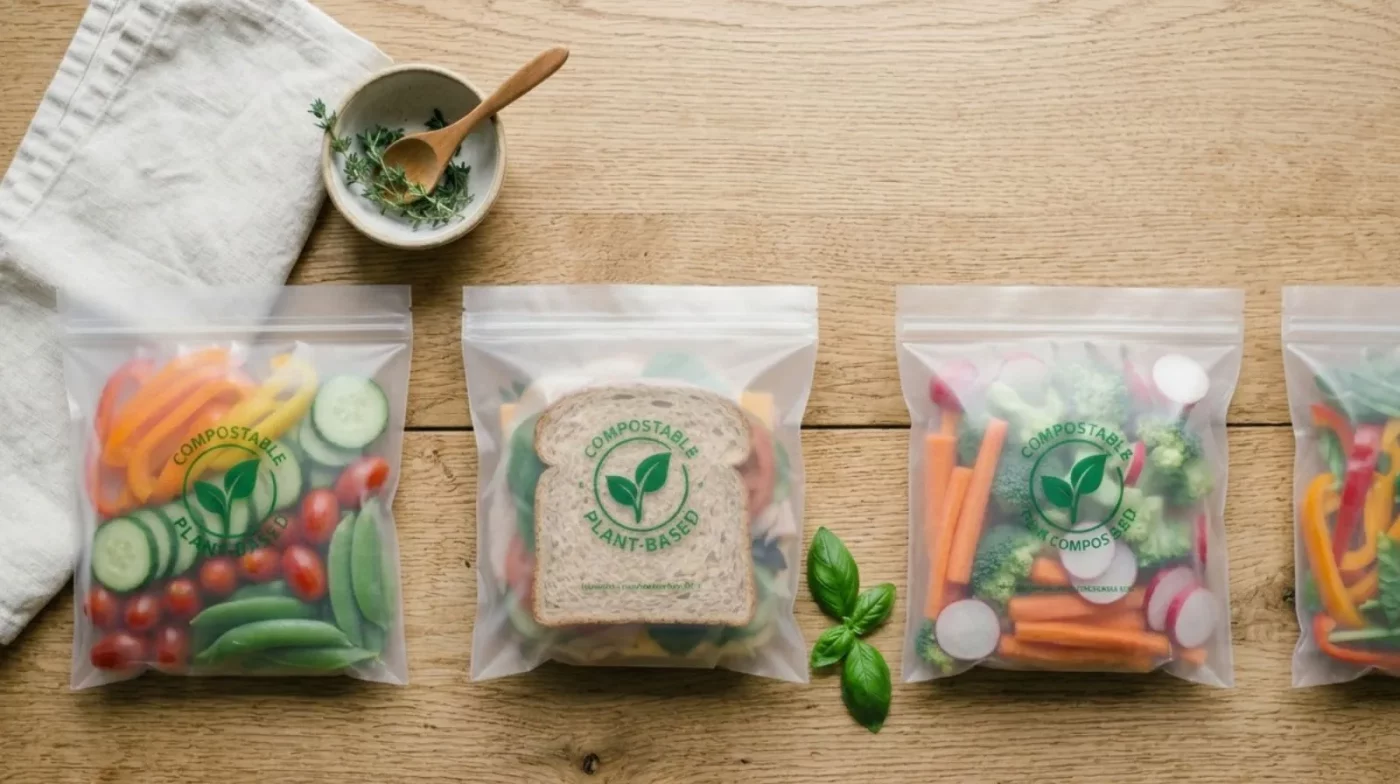
Apr
TLDR
- Compostable ziplock bags made from PBAT, PLA, or plant starch are generally food-safe when certified to EN 13432 or TÜV Austria OK Compost Home.
- They do not leach BPA or the harmful plasticisers found in conventional plastic bags.
- Most UK councils do not accept them in food waste bins; home composting or industrial composting is the correct disposal route.
- They work well for dry foods, snacks, and short-term fridge storage, but they are not designed for long-term freezer use or storing liquids.
Our Answer
Yes, compostable ziplock bags are safe for food storage when they carry food-grade certification. Look for EN 13432 or TÜV Austria OK Compost Home on the packaging, and check that the manufacturer confirms food-contact compliance.
Introduction
At Boring Basics, we stock certified, plastic-free products for UK homes because we think the swap from single-use plastic should be simple and trustworthy. Compostable bags are one of the most searched swaps right now, and the question we hear most often is straightforward: are they actually safe to store food in?
It is a fair question. “Compostable” tells you something about what happens at the end of the product’s life. It tells you very little about what happens while your lunch is sitting inside it. This post gives you a factual answer, covers what the certifications mean, and helps you decide whether compostable bags are the right choice for your kitchen.
What Are Compostable Ziplock Bags Made From?
Most compostable food bags sold in the UK use one or more of three materials: PLA (polylactic acid), PBAT (polybutylene adipate terephthalate), and plant starch, typically from corn or cassava.
PLA is derived from fermented plant sugars and gives the bag its structure. PBAT adds flexibility so the bag does not crack or split. Plant starch often forms the base layer and helps the whole film break down faster in composting conditions.
These materials matter for food safety because none of them contains bisphenol A (BPA) or the phthalate-based plasticisers that raise concerns with some conventional plastic films. That is a genuine advantage, not marketing copy. PBAT and PLA food bags are inert enough that the EU and UK food safety frameworks permit their use in food-contact applications, provided manufacturers meet the relevant migration testing standards.
What this means for you: check that the bag you are buying explicitly states it is food-contact safe, not just compostable. A bag certified for composting but not tested for food contact is a different product.
What Do EN 13432 and TÜV Austria OK Compost Home Mean?
These two certifications come up constantly when you look at compostable bags, and they are worth understanding clearly.
EN 13432 is a European standard that specifies what a material must do to be called compostable. It sets limits on heavy metals and requires that the material break down to at least 90% within 12 weeks under industrial composting conditions. Industrial composting means temperatures above 55°C, which are not replicated in a home compost bin.
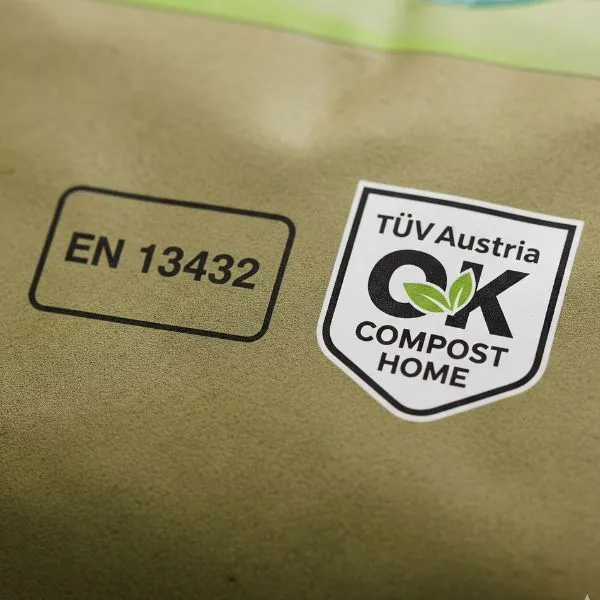
TÜV Austria OK Compost Home is a stricter certification for ambient-temperature home composting. If a bag carries this mark, it should break down in a garden compost bin within 12 months under typical conditions. For most UK households without access to an industrial composting site, this is the more useful certification to look for.
Neither certification directly tests food safety. That is covered separately under food-contact regulations. A bag can be EN 13432 certified and not food-safe, or food-safe and not EN 13432 certified. You want both. Our compostable ziplock bags for everyday food storage meet both standards, and we confirm food-contact compliance on every product page.
Do Compostable Bags Leach Chemicals Into Food?
This is the most common safety concern, and the answer depends on which chemicals you are asking about.
PLA and PBAT do not contain BPA, making them BPA-free resealable bags in the truest sense. Studies on PLA migration into food have found no significant transfer of harmful substances under normal storage conditions, meaning room temperature or fridge temperature for periods of a day to several days.
The caveat is heat. PLA softens at relatively low temperatures, around 55 to 60°C in many formulations. Storing hot food directly in a PLA-based bag, or leaving a bag in direct sunlight, can accelerate migration. The practical rule is simple: cool food before sealing it, and do not use compostable bags in the microwave.
PBAT behaves similarly. Current research does not flag it as a significant migration risk under standard cold-storage conditions, but it has not been studied as extensively as polyethene. If you are cautious by nature, use compostable bags for dry goods and snacks, and stick to glass or stainless steel for anything acidic or fatty stored over several days.
Are Compostable Bags Safe for Storing Raw Meat?
For short-term raw meat storage in the fridge, yes, provided the bag is food-contact certified. You should treat it the same way you would treat any food bag: use it once, dispose of it correctly, and do not reuse it after contact with raw protein.
The key limitation is not safety but durability. Raw meat contains moisture and fat, and compostable films are generally less resistant to prolonged contact with liquids than conventional polyethene. A bag intended for a single day’s use in the fridge is fine. Marinating meat for 48 hours is pushing the limits of what the film is designed for.
Environmental Impact: Compostable Bags vs. Standard Plastic
Standard plastic bags, particularly low-density polyethene (LDPE), do not biodegrade in any practical timeframe. When they fragment in the environment, they produce microplastics that persist in soil, waterways, and food chains. We cover the broader problem in more detail in our post on the difference between compostable and biodegradable bags.
Compostable bags made from PLA and PBAT do not produce microplastics in the same way when they break down under correct composting conditions. This is one of their genuine environmental advantages. The important qualification is “under correct composting conditions.” A PLA bag sent to a landfill does not compost; it sits in anaerobic conditions and breaks down very slowly, producing methane in some cases.
The environmental case for compostable bags is real, but it depends on disposal. If you send them to a landfill because you are unsure what else to do with them, you lose most of the benefit.
Can I Put Compostable Bags in My Council Food Waste Bin?
This is where UK households hit the most friction, and it is worth being direct about it.
Most UK councils do not accept compostable bags in kerbside food waste collections, even those marked EN 13432. WRAP UK’s guidance on compostable packaging notes that compostable packaging is not consistently accepted across UK local authority food waste collections, and the infrastructure to sort it reliably does not yet exist at scale.
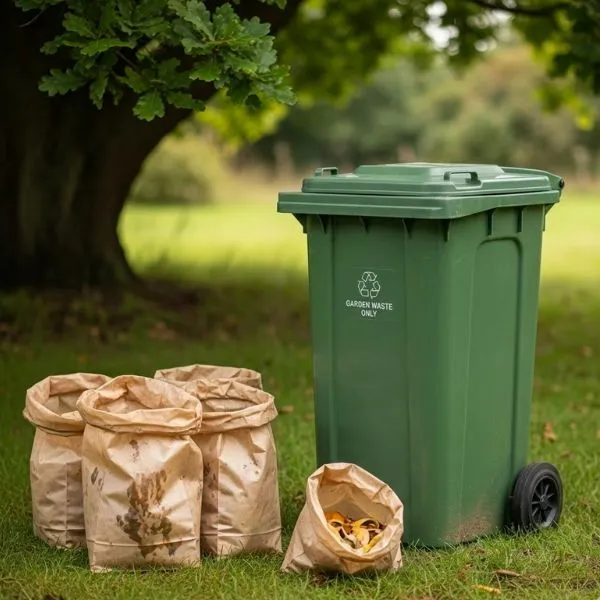
What this means in practice: check your local council’s guidance before assuming your food waste bin accepts compostable bags. Many councils require food waste to go in the caddy liner they provide, which is often a conventional biodegradable rather than certified compostable bag.
If your council does not accept them, you have two routes. Home composting works if the bag carries the TÜV Austria OK Compost Home mark. Industrial composting via a local scheme works for EN 13432 bags. If neither is available to you, the bags will end up in general waste, which is not ideal but still avoids the microplastic fragmentation issue associated with standard plastic films.
Practical Pros and Cons for UK Households
Pros
- Free from BPA and phthalate plasticisers found in some conventional plastic films
- Break down under correct composting conditions without producing persistent microplastics
- Works well for dry goods, sandwiches, snacks, and short-term fridge storage
- Certified products, such as our smaller compostable bags for snacks and lunchboxes, meet both food-contact and compostability standards
Cons
- Less durable than LDPE for prolonged wet or fatty food contact
- Not suitable for long-term freezer storage; the film can become brittle
- Disposal routes in the UK are patchy; council acceptance is not guaranteed
- The cost per bag is higher than that of standard plastic bags
Know how to Use and Dispose of Compostable Ziplock Bags in a UK Kitchen
- Check the certification before you buy. Look for EN 13432 and food-contact compliance on the product page. TÜV Austria OK Compost Home is the mark to prioritise if you plan to home compost.
- Cool food before sealing. Do not put hot food directly into a compostable bag. PLA films are sensitive to heat and can soften or distort.
- Use for dry or short-term wet storage. Compostable bags work well for sandwiches, fruit, vegetables, dry snacks, and short-term meat or cheese storage in the fridge.
- Avoid the freezer for extended periods. Compostable films can become brittle at freezer temperatures over several weeks. For freezer storage, use a dedicated freezer-safe alternative.
- Use each bag once for raw protein. Treat raw meat and fish bags as single-use. Do not rinse and reuse them after contact with raw protein.
- Check your council’s food waste guidance before disposal. If your council accepts certified compostable bags, use the food waste bin. If not, check whether you have a home compost bin suitable for OK Compost Home certified bags.
- Do not put them in general recycling. Compostable bags contaminate conventional plastic recycling streams. They go in food waste, home compost, or general waste, never in the plastic recycling bin.
Do and Don’t: Quick Reference
Do
- Buy bags that state both food-contact compliance and EN 13432 or OK Compost Home certification
- Use them for sandwiches, fruit, vegetables, and dry snacks
- Store in a cool, dry place away from direct sunlight
- Check your council’s specific guidance on compostable packaging
Don’t
- Microwave food inside compostable bags
- Store acidic or oily food for more than a couple of days
- Put them in the plastic recycling bin
- Assume your council food waste bin accepts them without checking
Key Takeaway Box
- Compostable ziplock bags are food-safe when certified for food contact, but compostability certification and food safety are separate things. Check for both.
- They do not contain BPA or the plasticisers associated with conventional plastic, making them a safer choice for everyday dry and short-term food storage.
- Disposal in the UK depends on your local council. Home composting is the most reliable route if your bag carries the TÜV Austria OK Compost Home certification.
- They are not a direct replacement for every use case. Avoid long freezer storage, hot food, and prolonged contact with liquids.
For a complete overview of materials, sizing, and certification details, read our full guide to compostable ziplock bags.
When to Choose Compostable Bags (and When Not To)
Choose compostable bags if:
- You are replacing single-use LDPE bags for everyday snacks, sandwiches, or fruit and veg
- You have a home compost bin and can use OK Compost Home-certified bags
- You want to avoid BPA-free resealable bags that still contain conventional plastic
- You are building a plastic-free food storage setup alongside other swaps
Do not choose compostable bags if:
- You need long-term freezer storage (use silicone or glass instead)
- You want to marinate food for more than 24 to 48 hours
- You have no composting route, and everything goes to landfill (the environmental case weakens significantly)
You can find the full range of plastic-free kitchen essentials at Boring Basics, including food wraps, beeswax wraps, and reusable containers for every storage need. If you are just starting, our sustainable home care starter bundles several of our most popular swaps in one box.
Conclusion
Compostable ziplock bags are a practical and genuinely safer alternative to conventional plastic for everyday food storage, provided you buy certified products and understand the disposal reality in your area. They are not a perfect solution, and no single product swap is. But for the bulk of daily kitchen use, they perform well and avoid the chemical concerns and microplastic risk associated with standard LDPE bags.
If you are ready to make the switch, shop our compostable ziplock bags for everyday food storage or browse the full plastic-free kitchen range to find the right fit for your household.
Frequently Asked Questions
Yes, for short-term fridge storage of one to two days, provided the bag is food-contact certified. Treat them as single-use after contact with raw protein, and avoid using them for extended marinating, as compostable films are less resistant to prolonged moisture and fat than conventional plastic.
Not in most cases. WRAP UK guidance confirms that compostable packaging is not consistently accepted across UK local authority food waste collections. Check your council’s specific guidance. If they do not accept compostable bags, use a home compost bin if your bag carries TÜV Austria OK Compost Home certification, or dispose of them in general waste.
Certified compostable bags made from PLA and PBAT do not contain BPA or phthalate plasticisers. Under normal cold-storage conditions, migration of harmful substances is not considered a significant risk. Avoid storing food at high temperatures inside compostable bags, as PLA softens at around 55 to 60°C, which could increase migration.
In the fridge, food-grade compostable bags perform well for two to four days under normal use. In the freezer, they can become brittle over extended periods, typically beyond four to six weeks. For long-term freezer storage, a purpose-made freezer container is a more reliable choice.
