
Compostable Cling Film UK: The Complete Guide
Jan
British households throw away 1.2 billion metres of plastic cling film each year. Most ends up in landfill or our oceans.
Compostable cling film promises a better option. But does it work in real kitchens? Can you actually compost it at home? And is the higher price worth paying?
This guide covers everything UK households need to know before switching.
TLDR
- Compostable cling film costs 2-3x more than plastic versions but breaks down in 12-24 weeks under proper conditions
- Performance is comparable to traditional cling film—works well on glass and ceramic bowls, though it has less stretch
- Most UK councils don’t accept it in food waste bins yet, so home composting is your main disposal option
- If You Care, Natural Collection, and Boring Basics are the most widely available UK brands, stocked in Waitrose, Ocado, and eco retailers
What Is Compostable Cling Film?
Compostable cling film is made from plant-based materials instead of petroleum-based plastic. The films break down into organic matter when composted properly.
Most brands use three main materials:
PLA (Polylactic Acid) comes from fermented plant sugars, usually corn starch. It’s clear and biodegradable but needs industrial composting facilities to break down properly.
PBAT is a biodegradable polyester that adds flexibility. It breaks down faster than PLA and works better in home compost.
Starch blends mix potato or corn starch with other biodegradable polymers. These tend to be the most home-compost-friendly option.
The material mix determines how and where you can compost the film. EN 13432 certification means it breaks down in industrial facilities within 12 weeks. OK Compost HOME certification means it breaks down in home compost bins within 12 months.
Not all compostable cling films carry both certifications. Check the packaging before you buy.
Compostable cling film Performance
Compostable cling film performs well for most kitchen tasks. The main difference is reduced stretch compared to traditional plastic wrap.
Here’s how the main UK brands compare to standard plastic wrap:
| Feature | Tesco Cling Film | If You Care | Natural Collection | Boring Basics |
|---|---|---|---|---|
| Stretch | Excellent (200%) | Moderate (80%) | Moderate (75%) | Good (90%) |
| Cling to glass/ceramic | Good | Good | Good | Excellent |
| Cling to itself | Excellent | Excellent | Good | Excellent |
| Seal strength | Strong | Strong | Moderate | Strong |
| Temperature range | -40°C to 100°C | 0°C to 50°C | 0°C to 50°C | 0°C to 50°C |
| Tears easily | No | Moderate | Yes | Moderate. Built-in cutter |
The stretch matters most when covering odd-shaped items. Compostable films stretch less than plastic versions. You need more care when wrapping irregularly shaped food.
The cling performance works well on most surfaces. Compostable films cling effectively to glass and ceramic bowls. They also seal well against themselves when wrapping sandwiches or covering plates.
Temperature limits affect usage. You cannot use compostable cling film in the microwave or freezer. The material becomes brittle when frozen and melts at low heat.
Most UK households find compostable wrap works well for covering bowls, wrapping sandwiches, and short-term fridge storage. It struggles with long-term freezer storage and reheating.
Cost Comparison in the UK
Compostable cling film costs more than plastic versions. The price gap is around 2-3x for most brands.
| Product | Length | Price | Price per Metre |
|---|---|---|---|
| Tesco Cling Film | 100m | £1.50 | £0.015 |
| Sainsbury’s Cling Film | 100m | £1.40 | £0.014 |
| If You Care Compostable | 30m | £3.99 | £0.133 |
| Natural Collection | 30m | £4.25 | £0.142 |
| Boring Basics | 30m | £3.99 | £0.133 |
You pay roughly eight to ten times more per metre for compostable options. A typical UK household using 50 metres yearly would spend £0.70 on plastic wrap versus £6.25 on compostable wrap.
The price reflects smaller production volumes and more expensive raw materials. Plant-based polymers cost more to produce than petroleum-based plastics.
Bulk buying reduces costs slightly. Ocado sometimes offers multipacks at 10-15% discounts. Independent eco shops occasionally run promotions.
For detailed cost analysis, including long-term value and environmental cost savings, learn more in our guide on whether compostable cling film is worth the price.
Where to Buy in the UK
Availability has improved significantly in the past two years. You no longer need to order from specialist retailers.
Supermarkets: Waitrose stocks If You Care in most branches. Ocado carries both If You Care and Natural Collection. Sainsbury’s stocks If You Care online but not in stores. Tesco and Asda don’t currently stock compostable cling film.
Online retailers: Amazon UK sells all major brands with next-day delivery. Ethical Superstore offers the widest range, including smaller brands. Big Green Smile and Natural Collection’s own website provide regular discounts. Boring Basics sells direct with free UK delivery on orders over £25.
Health food shops: Holland & Barrett stocks compostable wrap in larger branches. Independent health food shops often carry Natural Collection or local brands.
Zero waste shops: Package Free and other refill shops stock unbranded compostable film by the metre. Prices vary but average £0.10-£0.12 per metre.
Most UK households find Ocado or direct online ordering the most convenient option. Prices stay consistent across retailers, so choose based on delivery options.
How to Use Compostable Cling Film
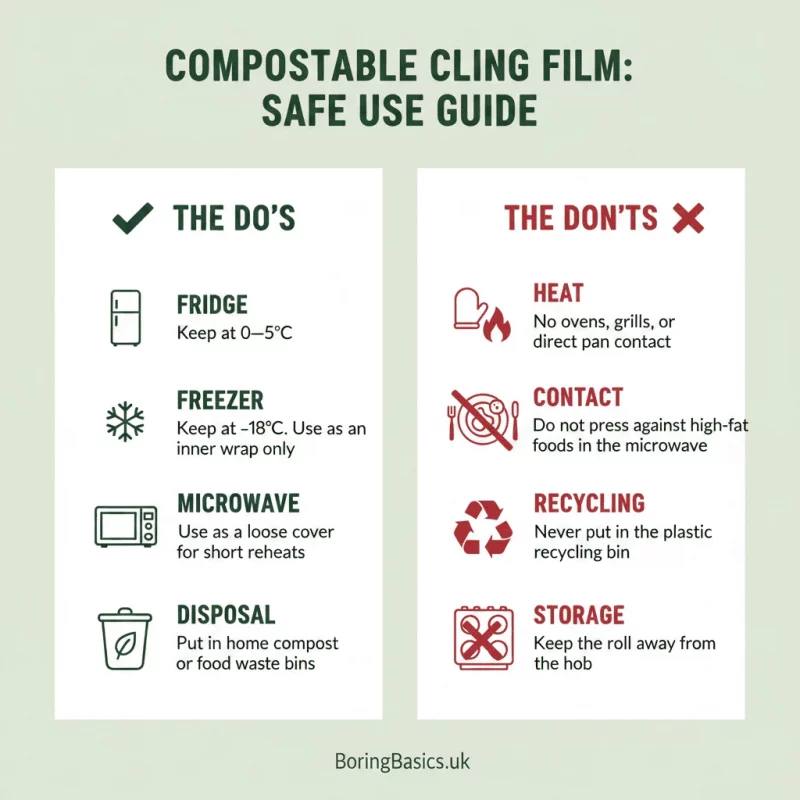
Compostable wrap needs slightly different handling than plastic versions. The material properties change how you use it.
Covering bowls: Press the film onto the bowl rim for a secure seal. The film clings well to glass and ceramic surfaces. Overlap the edges by 2-3cm for a better seal.
Wrapping food: Handle the film gently. Pull it from the roll slowly to prevent tearing. Wrap items in multiple layers rather than stretching a single layer tightly.
Storing in the fridge: Compostable wrap works well for short-term fridge storage up to 3-4 days. The film maintains its properties at normal fridge temperatures.
What doesn’t work: Don’t use it in the freezer. The film becomes brittle below 0°C and cracks easily. Don’t microwave it. The film melts at temperatures above 50°C. Don’t wrap very wet or oily foods for extended periods. The film can lose some cling when exposed to moisture or oil over time.
Storage tips: Keep the roll in a cool, dry place. Humidity can make the film stick to itself on the roll. Use within 12 months. The material can degrade on the roll over time.
Most users adapt within a week. You learn to work with the material rather than against it.
Disposal Options in the UK
How you dispose of compostable cling film determines whether it actually helps the environment. Getting this wrong wastes the environmental benefits.
Home composting: Films with OK Compost HOME certification break down in home compost bins. Add them to your compost along with food scraps. They take 6-12 months to fully decompose. Tear the film into smaller pieces to speed decomposition. Mix it well with other compost materials.
Food waste bins: Most UK councils don’t currently accept compostable packaging in food waste bins. Call your council to check. Some forward-thinking councils in Scotland and Wales have started accepting certified compostable packaging. England lags.
Council collection: General waste bins remain the only option for most UK households without a home compost. The film goes to a landfill or incineration. This defeats the purpose of buying a compostable wrap.
Industrial composting: You can take certified film to commercial composting facilities if one operates near you. Find your nearest facility through the Industrial Composters directory on WRAP UK’s website.
The disposal challenge represents the biggest barrier to adoption. For a detailed breakdown of UK composting infrastructure and what really happens to compostable packaging, read our complete guide on whether compostable cling films are actually compostable.
Is It Worth It?
The value depends on your household situation and priorities.
When it makes sense: You already home compost and have space in your bin. You use cling film occasionally rather than daily. You want to reduce plastic waste and can afford the higher cost. Your council accepts compostable packaging in food waste bins.
When it doesn’t: You don’t compost at home, and your council doesn’t collect compostable packaging. You need film for freezer storage or microwave use. You use large quantities daily, and price is a major concern.
The environmental benefit only materialises with proper disposal. Sending compostable film to a landfill provides no advantage over plastic wrap. In fact, it may perform worse because production requires agricultural land and processing.
UK households serious about reducing plastic should also consider alternatives like reusable containers and beeswax wraps. These eliminate waste rather than creating compostable waste.
For most households, compostable cling film works best as part of a broader strategy. Use it where it performs well. Use alternatives where it doesn’t.
Common Questions Answered
What certifications should I look for?
EN 13432 confirms industrial compostability. OK Compost HOME confirms home compostability. The Seedling logo indicates EN 13432 certification. Always check for third-party certification rather than trusting marketing claims.
Can I put it in my council food waste bin?
Most UK councils say no. Check your local council website or call their waste department. Rules vary significantly by region. Scottish councils tend to be more accepting than English councils.
Does it actually break down?
Yes, but only under proper conditions. It needs the right temperature, moisture, and microbial activity. Home compost bins in cold UK winters may slow decomposition. Industrial facilities provide optimal conditions. For the full scientific breakdown and independent testing results, see our detailed analysis of whether compostable cling films really work.
How long does it take to compost?
Industrial facilities break it down in 12 weeks. Home compost bins take 6-12 months. Cold temperatures and dry conditions slow the process. Shredding the film speeds decomposition.
Is it better than recycling plastic wrap?
You cannot recycle traditional cling film through UK household recycling. Some supermarkets accept it at plastic film recycling points. Compostable wrap offers an end-of-life solution that plastic wrap lacks.
Alternatives Worth Considering
Beeswax wraps last 6-12 months with proper care. They work brilliantly for covering bowls and wrapping bread. They don’t work for meat or very wet foods. UK brands include Beeswax Wrap Co and Greener Greens. Expect to pay £12-£18 for a three-pack.
Silicone stretch lids last for years and fit multiple bowl sizes. They create airtight seals and work in freezers. They cost £10-£15 for a six-piece set. Brands like Cookut and Kilner sell them at Lakeland and Amazon.
Glass or steel containers eliminate wrap. Initial investment is higher, but they last decades. IKEA and Pyrex offer affordable starter sets around £15-£25.
Many UK households use a combination. Compostable wrap for packed lunches and sandwiches. Beeswax wraps for covering bowls at home. Containers for leftovers and batch cooking.
Make the Switch That Works for You
Compostable cling film works for UK households who compost at home and use wrap occasionally. The performance matches traditional film for most daily tasks like covering bowls and wrapping food.
The higher cost balances against environmental benefits, but only if you dispose of it properly. Sending it to a landfill wastes your money and the environmental advantage.
Start small. Buy one roll and test it in your kitchen for a month. See where it works and where it doesn’t. Build a system using the right tool for each job.
Boring Basics offers certified compostable cling film that breaks down in home compost bins. Our film uses PBAT and starch blends rather than PLA-only formulations. That means it works in UK home compost conditions, not just industrial facilities.
Shop our home-compostable cling film range or browse our complete guide to sustainable kitchen basics.
Frequently Asked Questions
No. Compostable cling film melts at temperatures above 50°C. Microwaving will destroy the film and potentially contaminate your food. Use microwave-safe covers or containers instead.
Waitrose and Ocado stock compostable cling film from If You Care and Natural Collection. Sainsbury’s sells If You Care online only. Tesco, Asda, Morrisons, and Aldi don’t currently stock compostable options. Amazon UK and Boring Basics deliver next-day.
Unused compostable cling film lasts 12-18 months when stored properly in cool, dry conditions. Once used and added to compost, it takes 6-12 months in home compost bins or 12 weeks in industrial composting facilities to fully break down.
